
It’s not just people who don’t have confidence in their writing abilities that need editing. Even the smartest, most educated writer can make mistakes, and the results can be cringeworthy!
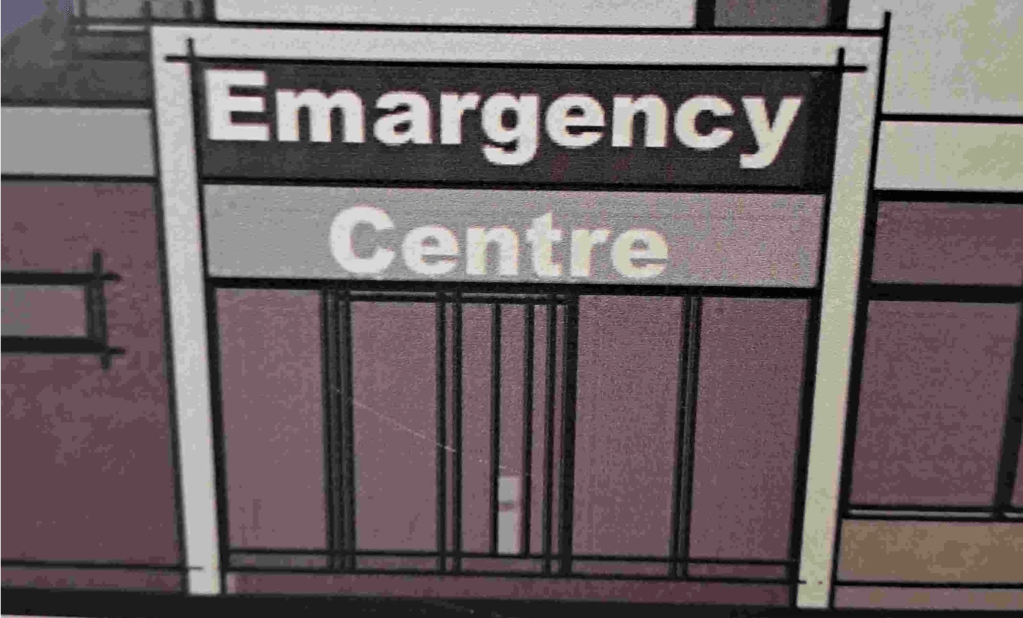
The image you see here comes from a proudly-displayed architect’s rendering of a new hospital building. And, while the plans for the structure are impressive, the “emargency” centre steals the show.
That drawing must have passed by dozens of pairs of eyes before it was printed in wall-sized format. And, once it had been, somebody probably had a facepalm moment, and somebody else said: “Well, that was expensive. Let’s hope nobody notices.”
So, how did that go? Here’s some educated guesswork.
Our Brains Tend to “Correct” What our Eyes See
It’s an interesting fact that our brains do more “seeing” than our eyes do. The eyes simply signal the brain which devotes a fair amount of processing capacity into telling us what we just saw. And it takes shortcuts.
As prominently displayed as our example typo may be, it would be safe to guess that most of the people who looked at the rendering didn’t notice it. It would be equally fair to suppose that an unknown percentage of people spotted the error and had a giggle at the architects’ and hospital’s expense.
I have to admit that I found that error very amusing at a time when I really needed the lift to my spirits, but the sad part is that it wasn’t meant to have that effect. Someone spent a lot of money on that display drawing, and it wasn’t supposed to make people like me laugh.
Do Spelling and Grammar Checkers Solve the Problem?
Since we can’t rely on everyone to unconsciously correct our errors as they read, we might take comfort in the knowledge that we use editing software. But don’t get too comfortable! Editing software is better than it used to be. It may even spot sneaky things like misplaced homonyms, but it is far from infallible.
When using editing software, you’ve probably had moments when you’ve told the checker that you said what you meant, and don’t want it corrected. Apart from flagging non-existent errors, software is capable of overlooking some of the real ones altogether.
As for faults in the logic or style of your sentences, software flounders or fails. You can easily make a statement that makes no sense whatsoever and get it past Grammarly or any other editing software you might care to mention. Would you like to publish that? Probably not.
Skills That Human Editors Need: Not as Obvious as You Might Think
Ask almost anyone, and they’ll say that you’re a good editor if you know the correct use of language, spelling, punctuation, and grammar. But, although these skills are a must for editors, they won’t work for you unless you’re incredibly focused and sensitised to errors.
It’s natural for people’s brains to work faster than their eyes, predicting what comes next and mentally tweaking what they see to meet their own expectations. That’s exactly why there’s a hospital out there displaying its plans for upgrades along with a label that reads “Emargency Centre.”
An editor has to look closely at what’s on the page regardless of what they might expect to see there. It takes extreme focus and it isn’t a skill that everyone has the patience to develop.
You also need to be a critical thinker. There are a lot of things that shouldn’t be said even if they’re said correctly. They could be illogical, confusing, or redundant – and if you’re publishing texts for business purposes, failings like these make businesses look less than professional.
Finally, editors need to be sensitive towards writers and try to retain their signature styles. They shouldn’t change things just because they’d have said them differently. They must have clear reasons for proposing changes and they need the ability to communicate their reasoning.
Tips For Editing your Own Work
Third-party editors are still the best bet. After all, we all know what we think we’re saying when we write – even if we aren’t expressing ourselves as well or as correctly as we might like to. However, we all have to self-edit at times. Try these tips.
Leave time between writing and editing. This helps to eliminate unconscious bias about what’s OK and what isn’t.
Shorten long sentences. It’s easy to make mistakes in long sentences, and they’re hard to read too.
Read it aloud. Reading your work aloud slows you down and helps you to focus on the text. Does it sound right? Was it easy to read? If anything seems “off” or made you stumble, it needs editing.
Think about it. Are you repeating yourself? Are you saying that X follows Y even though it doesn’t necessarily?
When to Use a Third-Party Editor
The more invested you are in what you publish, the more important third-party editing becomes. Your editor should work with you, showing you what changes they suggest and why. This helps you to sharpen your skills and it can prevent a situation in which the meaning of what was written gets lost in the translation between writer and editor.
I prefer writing to editing, but it’s something I’m reasonably good at all the same. So, if you’re looking for that extra pair of eyes to help you check and polish your writing, drop me a line. But be warned, if you need heavy editing, it might be cheaper to hire a good writer instead. It takes much longer to edit poorly-prepared texts than it does to write them from scratch.
Fortunately, the occasional error in electronic formats that are easily amended don’t have to be an “emargency.” You’ll be in good company too – because everyone makes little mistakes sometimes!
Now, I’m going to publish this blog post without editing it. Scary!
 Evergreen Times
Leave a comment